
Learn about ADH1 and its link to hypocalcemia

Hypoparathyroidism is a typical cause of hypocalcemia.
ADH1 is a major nonsurgical cause of hypoparathyroidisim.2-4
What is Hypocalcemia?
Calcium is a mineral that plays a crucial role in keeping your body functioning by:5
- Helping muscles contract
- Allowing your nervous system to send signals
- Keeping your bones strong
- Keeping your heart functioning
When calcium levels in the blood are abnormally low, it is called hypocalcemia. This is often caused by hypoparathyroidism. Due to calcium’s role in the neuromuscular system, hypocalcemia can lead to a variety of symptoms affecting the muscles and the nervous system. The severity of these symptoms depends on how low calcium levels are.5
Low levels of calcium can lead to symptoms including:1,6

Neuromuscular symptoms
- Muscle cramps and spasms
- Tingling in the fingers and toes
- Fatigue and muscle weakness
- Pain in joints
Neurological symptoms
- Poor memory and concentration
- Anxiety, depression
- Seizures in severe cases
Cardiovascular symptoms
- Heart rhythm disorders
Symptoms of hypocalcemia vary from person to person.
Causes of hypocalcemia:
Hypocalcemia can result from various conditions, such as:
Hypoparathyroidism
Is the classic cause of hypocalcemia3
Vitamin D deficiency due to:3,5
- Inadequate dietary intake
- Intestinal malabsorption
- Liver disease
- Chronic kidney disease
*Vitamin D is a nutrient that helps regulate the amount of calcium and phosphate in the body.
Acute pancreatitis3
(Sudden inflammation of the pancreas)
What is Hypoparathyroidism?
Hypoparathyroidism, or ‘hypopara’, is a condition characterised by low levels of calcium (hypocalcemia) and low levels of parathyroid hormone (PTH) in the blood.1,2
What is PTH?
Parathyroid hormone (PTH) plays a crucial role in regulating calcium levels in the body.1 It affects the kidneys, bones, and gut to maintain calcium balance.1
Low PTH Levels
- Reduced calcium absorption in the gut
- Reduced calcium reabsorption in the kidneys
- Decreased calcium release from bones
Causes of Hypoparathyroidism:
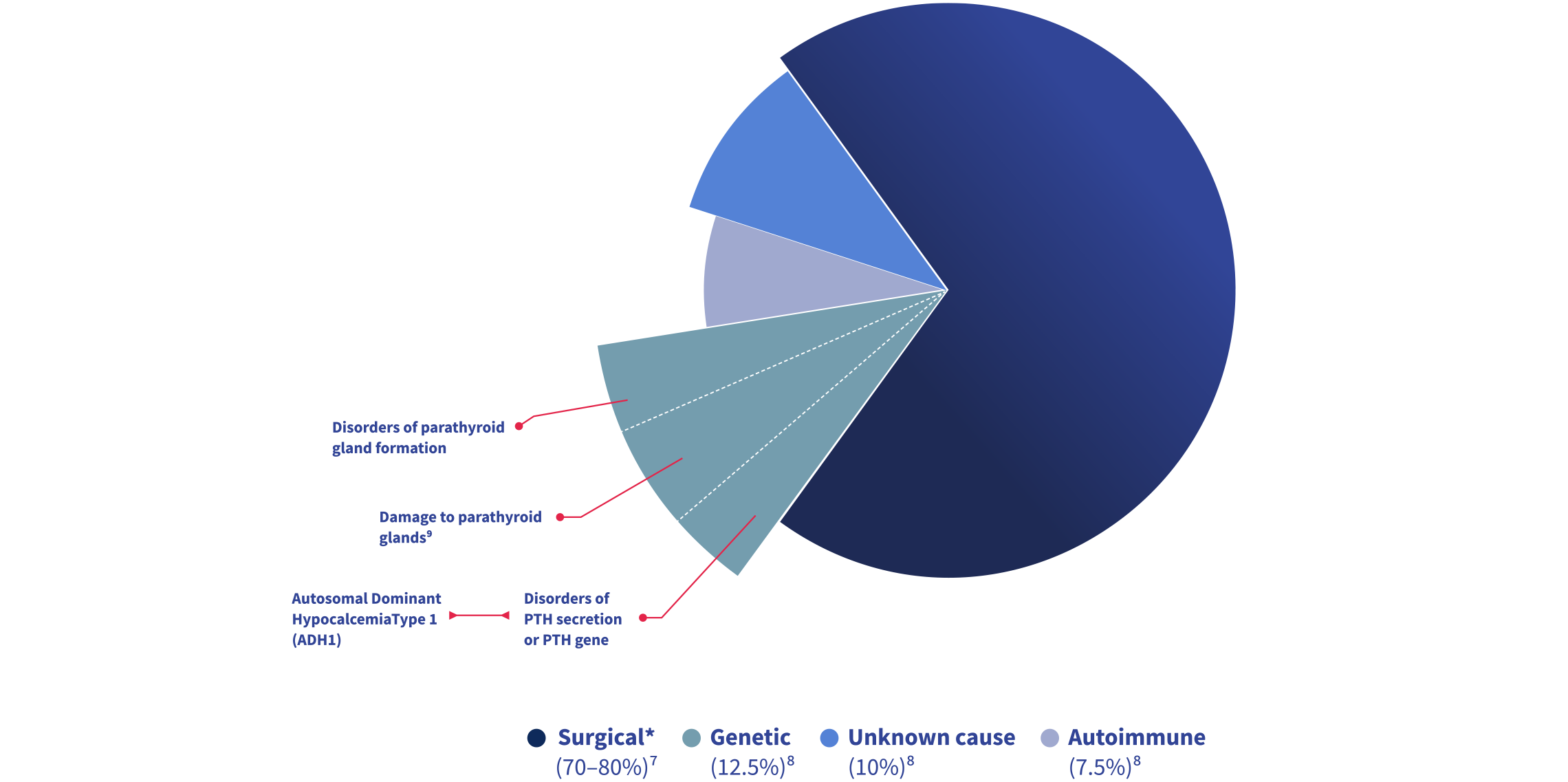
*Damage to the parathyroid gland(s) during surgery can cause temporary or permanent hypoparathyroidism.7
Introduction to ADH1
ADH1 is a genetic form of hypoparathyroidism. It is inherited in an autosomal dominant pattern, which means that if one parent has ADH1, there is a 50% chance of passing it on to offspring.1 It affects approximately 1 in 25,000 people.4 If not managed properly, it can lead to severe long-term consequences like chronic kidney disease and calcium buildup in the brain.1
Since ~10% of hypoparathyroidism cases are idiopathic (of unknown cause), some of these cases may also have a genetic origin.
Take action:
If you experience symptoms of low blood calcium or hypoparathyroidism, or you have a diagnosis of hypoparathyroidism with an unknown cause, speak with your doctor about genetic testing.
Eligibility, access and reimbursement of genetic testing may vary from country to country. Your doctor can advise you about options available in your country.

What is ADH1?
Uncover the root cause: could ADH1 explain your lifelong calcium challenges?
Read more
How is ADH1 diagnosed?
Seeking answers? Discover how an ADH1 diagnosis could change everything.
Read more
References
- Roszko et al. J Bone Miner Res. 2022;37(10):1926-1935
- Mannstadt et al. J Bone Miner Res. 2022;37(12):2615-2629
- Bove-Fenderson et al. Best Prac Res Clin Endocrinol Metab. 2018;32(5):639-656
- Dershem et al. Am J Hum Genet. 2020;106(6):734-747
- Tinawi. Cureus. 2021;13(1):e12420
- Shoback et al. J Clin Endocrinol Metab. 2016;101(6):2300-2312
- Mannstadt et al. Nat Rev Dis Primers. 2017;3:17055
- Kiam et al. Clin Endocrinol (Oxf). 2022;97(5):562-567
- Husebye et al. N Engl J Med. 2018;378(12):1132-1141